The interventional radiology service at Özel Medline Adana Hastanesi is a specialized practice in Adana, Turkey. Led by Prof. Dr. Uğur Özkan, it focuses on minimally invasive treatment of varicose veins and venous insufficiency. The practice operates within a private hospital, providing a dedicated environment for image-guided vascular procedures. Patients receive care that avoids traditional surgical stripping. Instead, catheter-based and injection-assisted methods are used.
Accreditations and Specialist Expertise
Prof. Dr. Uğur Özkan is a European Board Certified Interventional Radiologist. He completed his radiology specialization in 2003 at Çukurova University Faculty of Medicine. Before joining Özel Medline Adana Hastanesi in January 2025, he held academic and clinical roles at several institutions. This included serving as a Professor at Adana City Hospital. He received the title of Associate Professor in 2010.
The clinic prioritizes safety through continuous imaging guidance. Every treatment begins with a detailed Doppler ultrasound to map the affected veins. This ensures the source of venous reflux is accurately identified before any intervention. According to clinic data, these minimally invasive methods maintain a success rate above 95%.
Phlebology and Varicose Vein Care
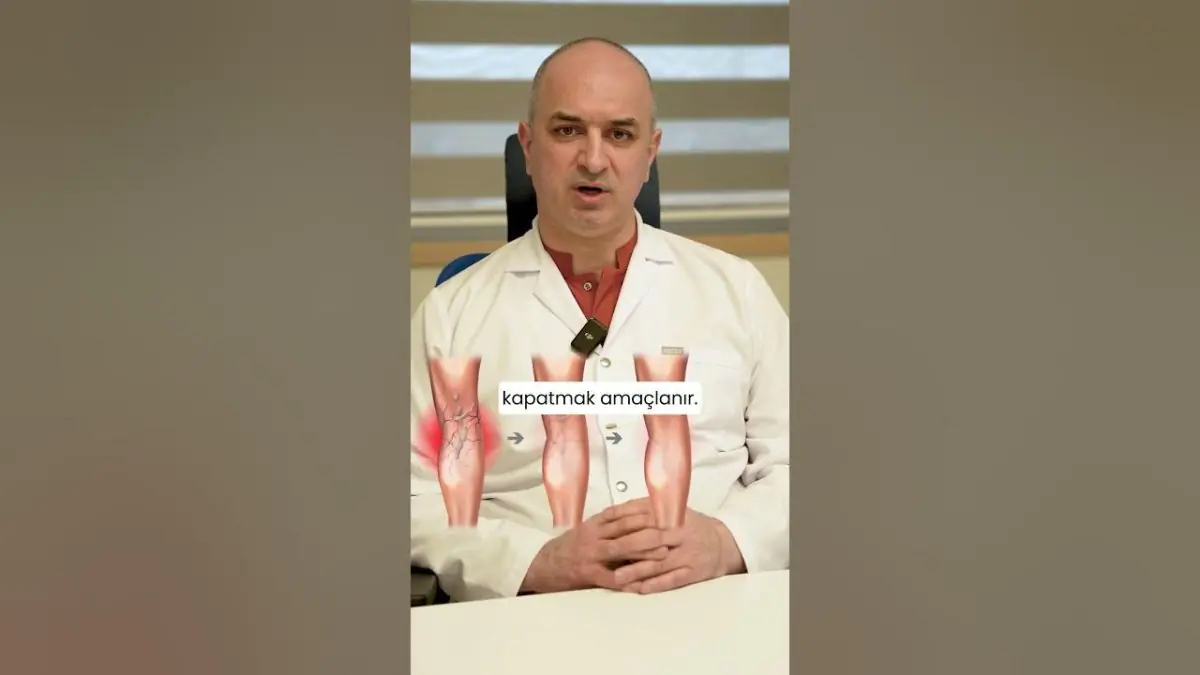
The phlebology service treats various stages of venous insufficiency and superficial vein thrombosis. Specialists use thermal and non-thermal techniques to close problematic veins without surgical incisions. These procedures are typically performed under local anesthesia, so patients remain mobile throughout.
The clinic offers several modern alternatives to traditional vascular surgery:
- Endovenous Laser Ablation (EVLA) – uses thermal laser energy to seal veins via a catheter.
- Radiofrequency Ablation (RFA) – uses radiofrequency heat to close damaged vessels.
- Cyanoacrylate Closure – applies a medical adhesive (medical glue) for immediate vein sealing.
- Foam Sclerotherapy – involves injecting a specialized foam guided by real-time ultrasound.
Because these methods are minimally invasive, most patients can walk immediately after the session. Most return to their daily routines by the following day. A follow-up appointment occurs one week after the procedure. A repeat ultrasound then confirms successful closure of the treated veins.
Diagnostic and Interventional Capabilities
Beyond vascular treatments, the service provides diagnostic imaging and interventional workups. Prof. Dr. Uğur Özkan performs various image-guided biopsies with high accuracy and minimal tissue trauma. These help diagnose conditions affecting the breasts, thyroid, pancreas, and lymph nodes.
The facility has a range of diagnostic technologies to support treatment planning:
- Doppler ultrasonography for vascular mapping
- MRI, including whole-body and abdominal scans
- Mammography with tomosynthesis for breast imaging
- Computed Tomography (CT) for detailed anatomical evaluation
- Laboratory services for complete blood counts and coagulation tests
Diagnostic imaging is used not only for assessment but also to provide real-time guidance during all interventional procedures.
Services for International Patients
The practice coordinates care for international patients through dedicated channels. The clinic provides access to interpreters and patient coordinators. Support is available in English, Russian, Arabic, German, and Turkish. This means patients clearly understand their diagnosis, treatment options, and post-operative recommendations.


 Clínica não está aceitando novas solicitações
 Tempo médio de resposta — 5 minutos
